

Results
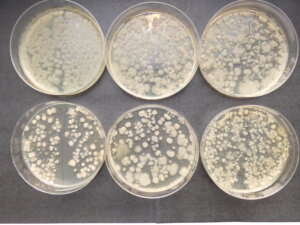
Figure 1: Bacterial growth showing heterogeneous antibiotic susceptibility
Various antibiotic susceptibilities observed within mixed bacterial communities (and even among cells within populations of species such as Escherichia coli or Pseudomonas aeruginosa) on standard agar plates reflect heterogeneous populations derived from clinical samples. This highlights the need for compartmentalized platforms capable of resolving differential growth responses at the single-cell scale and capturing division rate, thus enabling rapid and precise antibiotic selection.

Figure 2: Microfluidic generation and light-induced degradation of microgels: (a) droplet formation, (b) violet light, (c) green light (520 nm), and (d) dark incubation
Monodisperse, biocompatible microgels with disulfide crosslinks were engineered using microfluidics for externally controlled, on-demand degradation, with eosin Y serving as a light-activated trigger. They remain stable for at least two weeks in the dark, yet exposure to a gentle green light source (520 nm, 30 mW) induces complete microgel degradation within ~20 minutes.
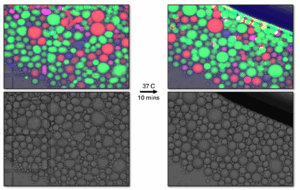
Figure 3: Fluorescent droplets after 10 min at 37 °C
Temperature-sensitive hydrogel beads enable the generation of 100 pL bioreactors in a multiplexed system, where droplets are indexed by distinct fluorophores. This two-step protocol allows the production of up to 16 emulsions within 2.5 minutes, followed by bacterial cultivation for antibiotic susceptibility testing (AST).

Figure 4: Microfluidic chip integrated with laser-based detection
Light scattering analysis of picoliter droplets enables quantitative assessment of the number of cells per droplet. On-chip detection was optimized to correlate defined cell numbers (e.g., 0, 25, 50, and 100 cells) with scattering signals from individual droplets at a throughput of 1.2 kHz.
Current microfluidic efforts focus on minimum inhibitory concentration (MIC) studies using Escherichia coli and different antibiotics, with the goal of significantly reducing MIC screening time from days with conventional protocols to hours using droplet-based assays.
To date, one patent application and one scientific publication have been prepared based on the results obtained during the implementation of the project. In addition, work is currently underway on four further scientific publications and one patent application, which are at various stages of preparation and data analysis based on the results obtained during the project.
Scientific publication
• Krzak J., Garguliński P., Pyzik A., Mignon E., Kamiński T.S., Multiplexed Antibiotic Susceptibility Testing using Vortex-Generated Microdroplets and Fluorescence Encoding. The manuscript was submitted for peer review on May 31, 2026, to the journal Sensors and Actuators: Reports.
Patent application
• “Method for manufacturing core–shell microcapsules, microcapsules obtained by this method, and their use”. The patent application was filed with the Patent Office of the Republic of Poland on May 19, 2026, and was assigned application number P.455786. The inventors are Józef Krzak, Karol Wojciechowski, and Tomasz Kamiński.
The results obtained within the project were also regularly presented at leading international scientific conferences dedicated to microfluidics, synthetic biology, diagnostics, and laboratory automation. These activities contributed to the dissemination of the project outcomes within the international scientific community, enabled valuable feedback from experts, and facilitated the establishment of new scientific collaborations and professional networks.
• µTAS 2025 – The 29th International Conference on Miniaturized Systems for Chemistry and Life Sciences, November 2–6, 2025, Adelaide, Australia
Tomasz Kamiński – oral presentation: Image-based Droplet Microfluidic Platform for High-Throughput and Label-Free Functional Characterization of Microbial Communities.
• SLAS 2026 International Conference & Exhibition, February 7–11, 2026, Boston, USA
Maciej Andrzejewski – poster: Ultra-High Throughput Droplet Microfluidic Image-Based Sorting for Selection of Proteolytic Bacteria.
• Microfluidic Horizons 2026, May 18–22, 2026, Padua, Italy
Luca Potenza – oral presentation: Droplet Microfluidic Multistep Platform for High-Throughput Characterization and Active Selection of Microorganisms.
• SLAS Europe 2026 International Conference & Exhibition, May 19–21, 2026, Vienna, Austria
Józef Krzak – poster: Multiplexed Antibiotic Susceptibility Testing in Vortex-Generated Microdroplets.
• SLAS Europe 2026 International Conference & Exhibition, May 19–21, 2026, Vienna, Austria
Paweł Garguliński – poster: Rapid Antibiotic Susceptibility Testing Using Droplet Microfluidics and Light-Scattering.
• SLAS Europe 2026 International Conference & Exhibition, May 19–21, 2026, Vienna, Austria
Tomasz Kamiński – poster: Ultra-High Throughput Droplet Microfluidic Image-Based Analysis of Bacterial Microcultures.
• 2026 MPS World Summit, May 26–29, 2026, Washington, DC, USA
Elise Mignon – poster: Microfluidic Detection of Bacteria and Rapid MIC Determination Using Droplet-Based Optical Scattering.